Buying rural land to forage
Most good foraging ground in Japan belongs to someone else, so some people buy their own. Ownership solves access. It does not replace the farmland permit, the forest notice, the hunting license, or certain identification of what grows there.
By Matt Ketchum, founder and editor
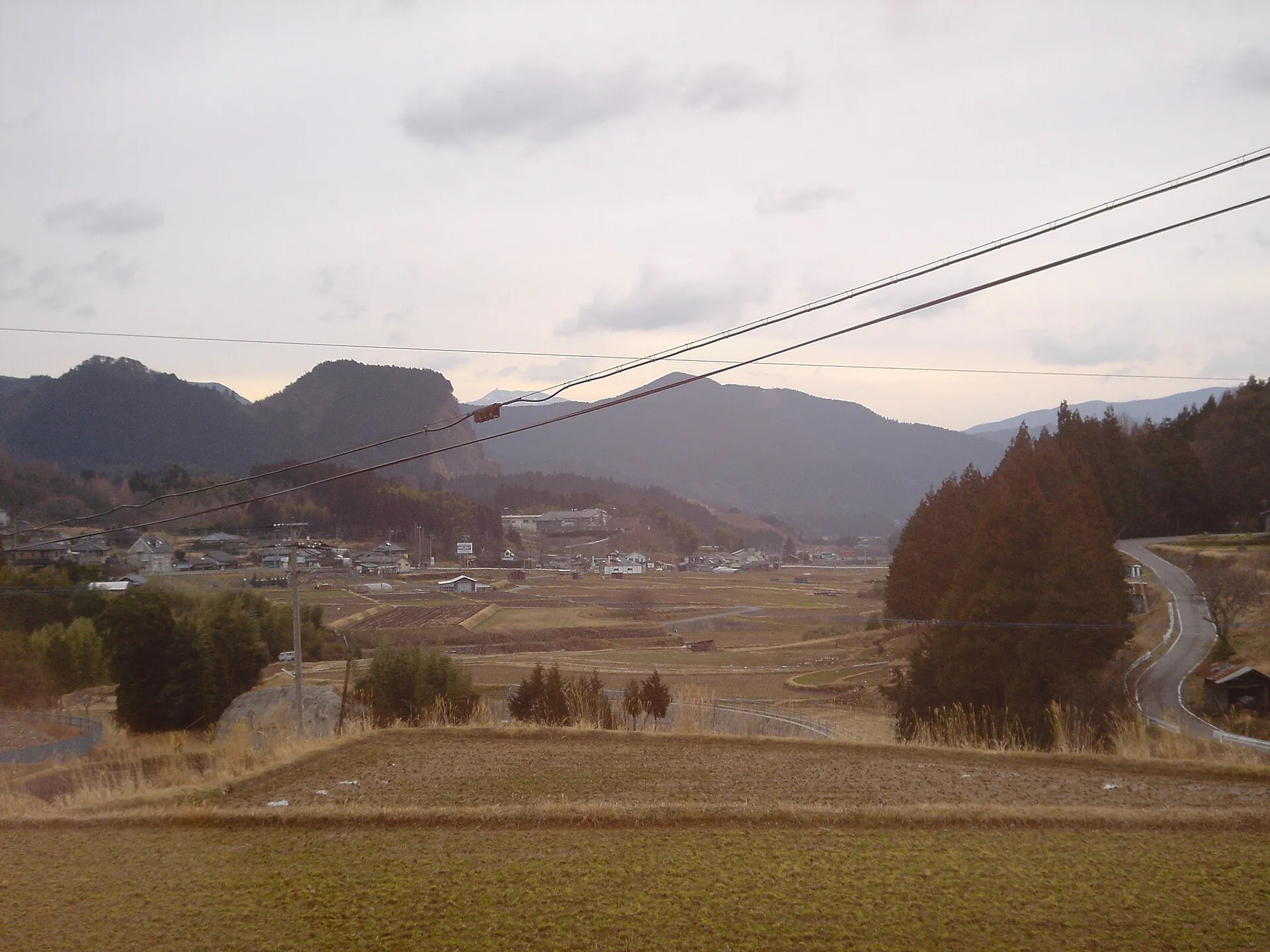
Image credit: Satoyama in Kumakogen, Ehime by Tonytakuya, Public domain
Short answer
Taking wild plants, mushrooms, or bamboo shoots from someone else’s forest without permission can be forest theft under Article 197 of Japan’s Forest Act, so owning land is the cleanest way to forage without asking.
Buying farmland still needs an agricultural committee permit; the minimum-area rule ended in April 2023, but the farming tests did not. Buying forest land triggers a 90-day notice to the municipality, whatever the size.
Ownership does not license hunting or trapping, and it does not make plants safe: MHLW counts 218 toxic-plant poisoning incidents and 17 deaths in Japan from 2016 to 2025.
Why buy land to forage?
Almost every slope where fukinoto, warabi, bamboo shoots, or mushrooms come up belongs to someone: a family that moved to the city, a municipality, a shrine, or the national forest. Walking in with a basket is not a neutral act. Japan’s Forest Act, Article 197, treats taking forest products without right as forest theft, punishable by up to three years’ imprisonment or a fine of up to ¥300,000, and up to five years or ¥500,000 inside a protection forest. The Forestry Agency’s Tohoku office spells out that forest products include wild plants, mushrooms, rock, and soil, and it asks visitors to national forest to file entry notices.
That is why some cooks, restaurant owners, and would-be smallholders look at buying their own rural plot, often an akiya with a field or a wooded hill attached. It is a sound instinct. Ownership settles the access question cleanly. The problem is that it settles only that question, and the other rules start on the day the title transfers.
Can anyone buy farmland now?
More people can than before. Since April 1, 2023, the minimum-area requirement under Article 3 of the Agricultural Land Act is gone. Before that, a buyer generally had to end up farming at least 50 ares outside Hokkaido, though many agricultural committees set lower local figures, sometimes 1 square meter for fields attached to an akiya-bank house.
The permit itself did not go away. The agricultural committee still has to approve the transfer, and the other tests remain. Fukushima City’s explanation is a clear example of how committees apply them: the buyer has to farm all of the land efficiently, someone in the household has to do the farm work regularly (in principle 150 days a year, with less accepted where the crop needs less), and the use has to fit the area, for example joining local water management or not spraying in a district farmed without pesticides. Growing for your own table can be approved, but leaving most of the field idle cannot. Turning farmland into a house site or parking needs a separate conversion permit.
What changes when it is forest?
If the land is forest covered by the prefecture’s regional forest plan, the new owner has to notify the municipality within 90 days of becoming the owner, whatever the area and whether the land came by purchase or inheritance. The one exception is a buyer who already filed a land-transaction notice under the National Land Use Planning Act. The registry category does not decide this; land that is forest in practice is likely covered. Since April 2026 the form also asks for the owner’s nationality, and owners living abroad have to give a contact in Japan.
The notice is separate from registering the title. Inheritance registration has been a legal duty since April 2024, within three years of learning about the inheritance. A wooded hill bundled into an akiya sale is therefore a filing duty and a maintenance responsibility before it is a foraging ground.
Does ownership let you trap boar?
No. Under Japan’s wildlife law, hunting means taking one of 46 designated game species by a legal method, with a hunting license, registration with the prefecture, and hunting tax paid. Outside Hokkaido the general season runs from November 15 to February 15, and areas such as wildlife protection zones are closed. Catching animals outside that system, for example to stop crop damage, needs a separate capture permit; the municipality can tell you where to apply.
Selling the meat is a third step. Shops and restaurants serving gibier have to buy meat dressed at a facility licensed for meat processing under the Food Sanitation Act, and MHLW warns that raw or undercooked venison and boar carry hepatitis E virus, enterohemorrhagic E. coli, and parasites. A boar caught on your own land is not a menu item until it has passed through that route.
Is what grows there safe?
A deed does not identify a single plant. MHLW’s ten-year table for 2016 to 2025 counts 218 poisoning incidents from toxic plants, 688 patients, and 17 deaths. Autumn crocus (イヌサフラン) alone caused 22 incidents and 13 deaths; it is mistaken for giboshi, gyoja ninniku, potatoes, and onions. Daffodil leaves taken for nira or nobiru caused 74 incidents. Aconite is confused with nirinsou and momijigasa.
Inherited land adds a specific risk: a garden can hold ornamentals someone planted decades ago, and nobody left a list. MHLW issued a separate notice on poisonings from ornamental plants in 2022. The rule the ministry repeats is the right one: if you cannot identify a plant or mushroom with certainty, do not pick it, eat it, sell it, or give it away. We do not publish identification keys, because a written description is not enough to separate these plants in the field. Ask the local health center or an experienced local forager standing next to you.
What to check before signing?
The checks that decide whether a plot works for food happen before the contract, not after it.
- Land category and actual condition: is it farmland under the Agricultural Land Act, forest under the regional forest plan, or residential land?
- Whether the agricultural committee is likely to approve your purchase and the way you plan to farm.
- How you reach the plot, and whether that route crosses a neighbor’s land.
- Boundaries, which are often unsurveyed or recorded only on old maps.
- Wildlife damage in the area and who handles capture locally.
- Water rights and the neighborhood work that comes with fields.
Where can you get that checked?
Our sister site Akiyaz works on rural property in Japan and does this kind of check as its Property Intelligence Report: a register that separates confirmed facts from listing claims and unknowns, zoning and hazard checks where public sources allow, and a list of questions for the broker, the municipality, and professionals. If you have not chosen a region or a property type yet, its buyer brief starts one step earlier. Both are linked under related media at the end of this page.
Neither is legal advice. The agricultural committee and the municipality decide permits and notices, and an administrative scrivener or a lawyer handles the filings. What a report does is put the questions in front of you while you can still walk away.
Go deeper
- Gassan bear injury: Wildlife response
- What gibier means in Japan: Gibier guide
- Gibier handling training: Gibier infrastructure note
Sources and further reading
- Entry procedures for national forests, with Forest Act Articles 197 and 198: Tohoku Regional Forest Office, Forestry Agency (JA)
- Abolition of the minimum-area requirement for acquiring farmland: Fukushima City (JA)
- Forest land ownership notification system: Forestry Agency (JA)
- Overview of the hunting system: Ministry of the Environment (JA)
- Food poisoning from toxic plants: Ministry of Health, Labour and Welfare (JA)
- Hygiene management of gibier: Ministry of Health, Labour and Welfare (JA)
- For producers who want to sell captured deer and boar as gibier: Ministry of Agriculture, Forestry and Fisheries (JA)
Related video / media
- Akiyaz (our sister site): Property Intelligence Report for a specific rural property: Akiyaz (sister site)
- Akiyaz (our sister site): buyer brief before choosing a region: Akiyaz (sister site)
Need a sourcing check?
Send the specific context behind your decision. A free inquiry checks fit; the paid sourcing assessment works through one concrete question.