Japanese tea flavor profiles for food: sencha, bancha, hojicha, and beyond
Japanese tea is easier to use with food when it is treated as flavor architecture: bitterness, sweetness, roast, aroma, body, temperature, and what the cup does next to fat, salt, rice, vegetables, fish, or game.
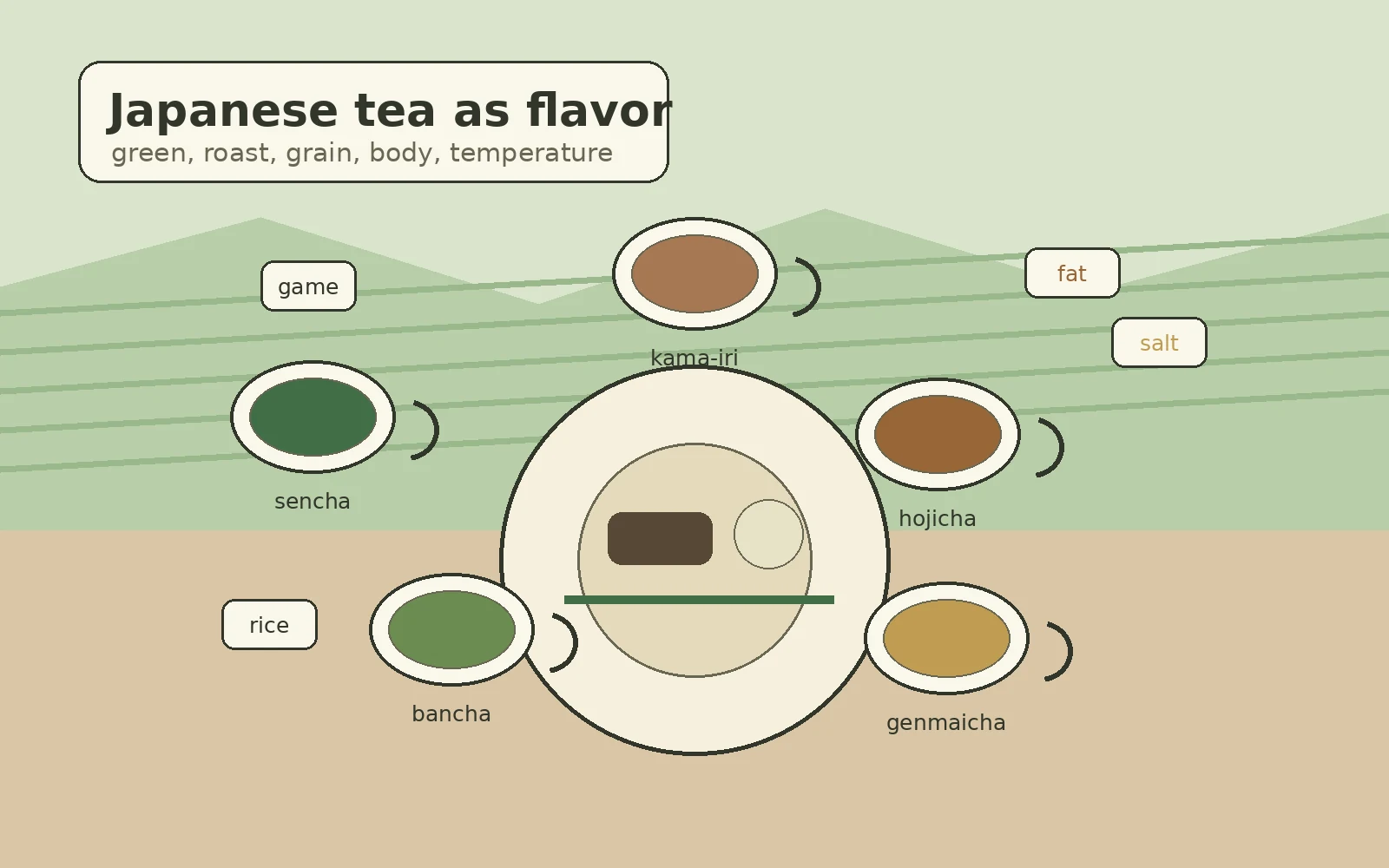
Image credit: Japanese tea flavor profiles editorial illustration by wildfood.jp editorial artwork, Original site artwork
Short answer
Japanese tea works with food when it is chosen by function rather than status.
Sencha, bancha, hojicha, genmaicha, kama-iri tea, and local teas can reset fat, soften salt, add roast, sharpen vegetables, or keep a delicate dish quiet.
Restaurants should test the tea beside the actual dish, then describe the pairing in plain flavor terms.
Start with function
Tea pairing gets better when the first question is not prestige. It is function. Does the tea refresh the mouth after fat? Does it soften salt? Does roast make a grilled dish feel deeper? Does bitterness sharpen vegetables? Does a cool brew keep a delicate plate quiet?
Sencha, bancha, hojicha, genmaicha, kama-iri tea, and local teas can all be useful, but not in the same way. Brewing temperature, extraction time, and serving temperature may change the pairing as much as the tea name.
Useful profiles
Sencha can bring green aroma, bitterness, and sweetness. Bancha can be plain, daily, and food-friendly. Hojicha can add roast and warmth. Genmaicha can make rice and grain notes obvious. Kama-iri styles can bring pan-fired aroma and a rounder profile.
For restaurants and home cooks, the practical move is to test tea next to actual food: grilled boar, rice, pickles, mushrooms, salt-heavy snacks, cheese, citrus, and simple sweets. A good pairing is repeatable, not decorative.
Go deeper
Sources and further reading
- MAFF tea information page: Ministry of Agriculture, Forestry and Fisheries (JA)
Need this checked for your menu, region, facility, or product?
Send the specific context behind your decision. A free inquiry checks fit; the paid sourcing assessment works through one concrete question.