Fukushima's Sasakino bear incident shows why wildlife response needs infrastructure
Four injuries, a bear inside an industrial site, traffic controls, schools, police, fire, city staff, prefectural staff, hunters, and companies: Sasakino shows wildlife response is an infrastructure problem.
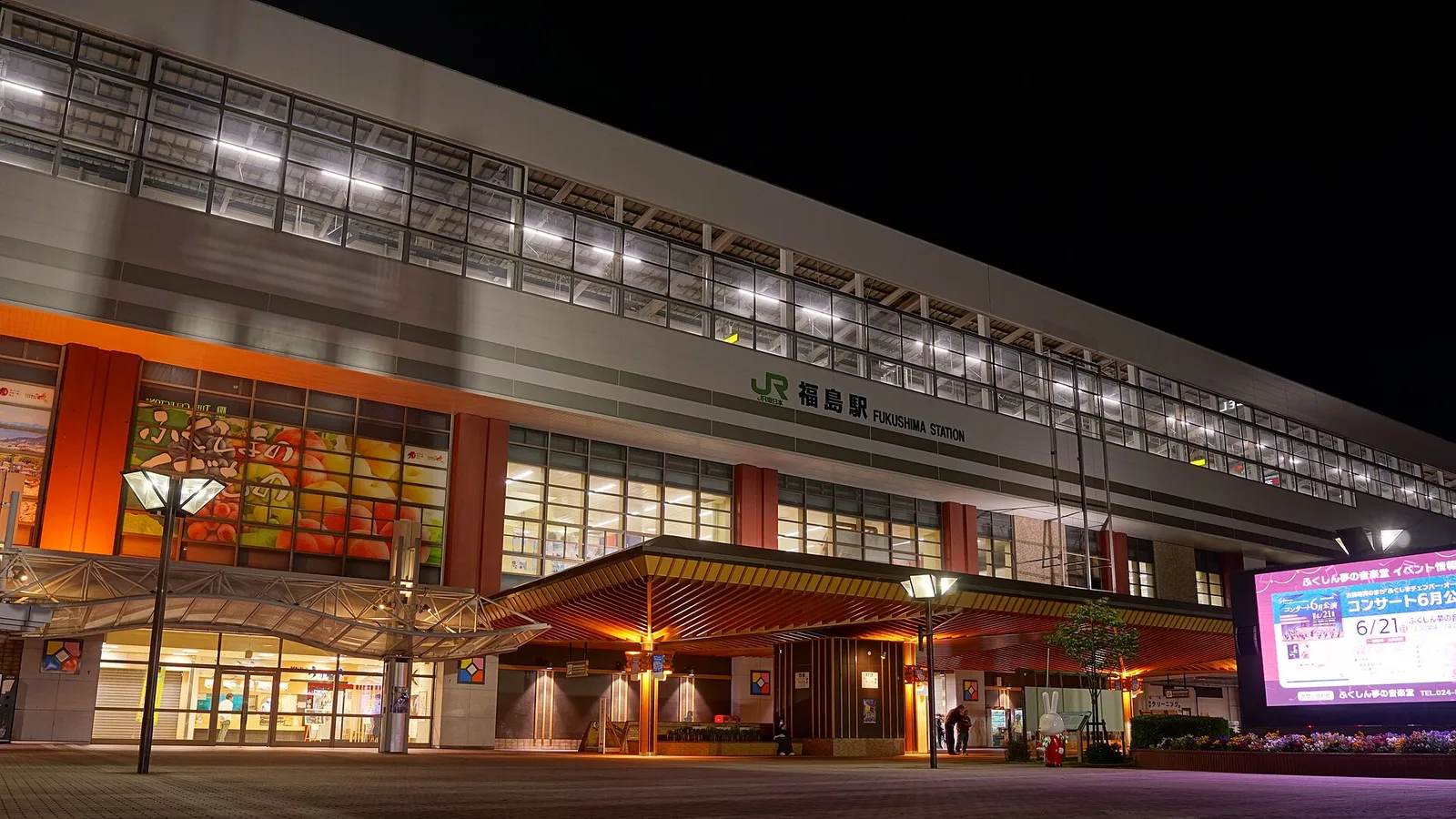
Image credit: Fukushima Station west exit at night by 663highland, CC BY 2.5
The shape of the problem
Fukushima City's official record of the Sasakino bear incident describes the practical shape of a modern wildlife response: late-night sighting reports, early-morning tracks, four injured people by the next morning, traffic restrictions, industrial premises, police, fire, city staff, prefectural staff, hunting association coordination, and continued warnings after the bear left the immediate site.
This was not deep backcountry. The named places include business premises and station-area surroundings in Fukushima City. That matters because the response has to protect workers, residents, schools, roads, companies, and responders at the same time.
Capacity has to exist before the emergency
Food use is never the first question during an active bear incident. Human safety comes first: evacuation when needed, road control, trained responders, lawful authority, and clear public communication.
But if capture or culling becomes necessary, the next steps cannot be improvised. A municipality needs to know who can act, who authorizes the action, where an animal can be received, how quickly it can be chilled, whether inspection and processing are possible, and when disposal is the only responsible answer.
Wild meat as infrastructure, not slogan
The wrong message is that bear meat demand will fix bear conflict. Demand should never encourage reckless harvest, and an emergency animal is not automatically suitable for food.
The stronger message is narrower: when a bear must be captured or culled for legitimate management reasons, and when the animal can be handled legally, hygienically, and transparently, Japan should have the infrastructure to use it instead of wasting it.
That means licensed operators, clear records, inspection discipline, full-cooking guidance, honest limits, and buyers who understand that wild meat is a serious supply chain rather than a novelty story.
Go deeper
- Bear incidents are infrastructure warnings, not marketing hooks: Field note
- Kuma Village’s new gibier plant is the boring infrastructure Japan needs: Gibier infrastructure
- What makes wild food useful to a restaurant?: Field note
Sources and further reading
- FTV report: bear at a factory site in Sasakino, Fukushima City: Fukushima TV (JA)
- TV Asahi report on the Sasakino bear response and injuries: TV Asahi / ANN (JA)
- Fukushima City bear information and warnings: Fukushima City (JA)
Related video / media
- FTV local-news page, with video module when available: Fukushima TV (JA)
Need this checked for your menu, region, facility, or product?
Send the specific context behind your decision. A free inquiry checks fit; the paid sourcing assessment works through one concrete question.